{matched_content}
Author: admin
-

Hurricane Lala: Hawaii battles with flash floods and strong winds
Hawaii has been hit by flash floods and mudslides that have swept away homes after category one Hurricane Lala skirted Big Island, leaving one person dead in a car accident.
More than 100 properties were uprooted from their foundations on Big Island, but Governor Josh Green said there “amazingly” did not seem to have been any wider loss of life.
Despite not even making landfall, the storm still dumped up to 32in (81cm) of rain in places, sending torrents raging down mountainsides. More than 200,000 households were without power.
Although Lala has since weakened to a tropical storm and was tracking westward, south of Hawaii, the danger is not over, say officials.
The storm’s eyewall howled within 30 miles (48km) of Big Island’s South Point overnight, but it was close enough to bring flash flooding, Hawaii County said on Sunday.
After gaining hurricane strength on Saturday afternoon, packing wind speeds of 91mph, Lala’s winds have now decreased to near 65mph, said the National Hurricane Center (NHC) in its latest advisory at 20:00 EDT (00:00 GMT) on Sunday.
-

Ferrari’s first ever electric car sold for record $40m at auction
But Ferrari’s share price dropped the day after the Luce’s launch, following backlash over the car.
Among those criticising the car were Italy’s deputy prime minister Matteo Salvini and former Ferrari chairman Luca Cordero di Montezemolo, who said the car was “risking the destruction of a legend”.
Ferrari’s chief design officer Flavio Manzoni said in an interview in May that critics are part of the innovation process and that he believed people would come to appreciate the Luce.
The company has not disclosed its target for Luce sales but, according to a Financial Times report, it has hit this year’s goal thanks to strong demand from China.
Sotheby’s said in a statement, external that the auctioned vehicle marked an “unbeatable opportunity” to own the first production car of the Luce.
The car has special wheels, customised brakes and a white finish.
The charity sale marks a “tangible expression of innovation, responsibility, and long-term vision for future generations,” Sotheby’s said.
Ferraris often attract some of the highest prices at car auctions.
A bespoke Ferrari Daytona SP3 supercar raised $26m for the carmaker’s education initiatives at an auction in 2025. At the time it set an auction record for the highest-price paid for a new car.
The current record for the highest price paid at auction was an ultra-rare 1955 Mercedes-Benz 300 SLR Uhlenhaut Coupé, which was sold for $142m in 2022.
-
South Korea: One killed in Geoje landslide as record rains hit southern region
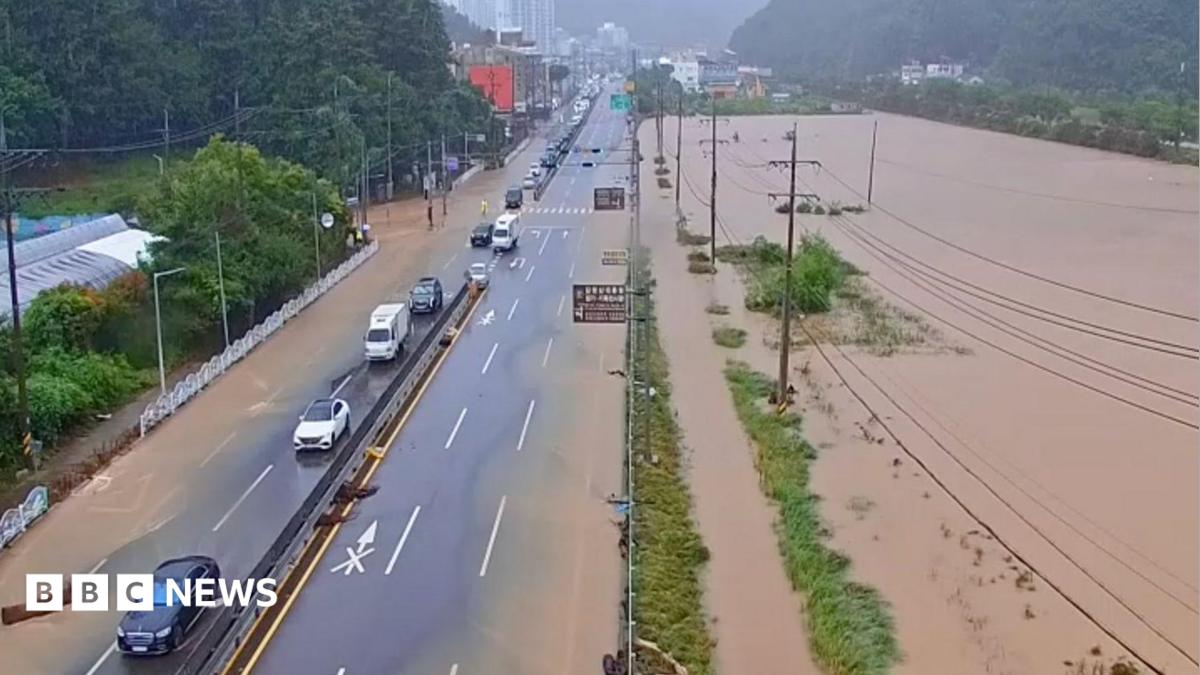
Torrential rains have pummelled South Korea’s Gyeongsang province, triggering a landslide that killed one person and wounded two others.
The landslide buried the first floor of an apartment building in the south-eastern city of Geoje on Monday morning. Rescuers pulled out three people, one of whom was later declared dead, local media report.
This comes as record rainfall triggered by back-to-back storms caused widespread flooding and landslides in parts of China, Japan and the Philippines.
Geoje city saw 124.5mm of rain in a one-hour period, the highest since South Korea’s meteorological agency started keeping records for the city in 1972.
Between Sunday and Monday, Geoje received more than 400mm of rain overnight.
Videos on social media show cars submerged in Geoje as strong currents swept the streets.
City authorities announced that some tourist attractions will be closed on Monday due to the heavy rain.
Bus operations and household waste collection have also been suspended due to flooded or damaged roads, authorities said.
On Sunday, authorities urged residents to avoid driving, stay away from places like riverbanks and evacuate to safe areas if needed.
-

Ebola outbreak in DR Congo becomes deadliest in its history
The Ebola outbreak in the Democratic Republic of Congo is now the deadliest in its history, according to public health officials.
A total of 2,325 people have been killed by the virus since it was declared on 15 May, surpassing the death toll of the country’s 2018-2020 outbreak.
The outbreak was already the fastest growing on record, UN humanitarian chief Tom Fletcher said last week, warning that “the epidemic is killing someone every 30 minutes”.
There is currently no approved vaccine available for the Bundibugyo species that has caused the current epidemic but several are in development, including one based on technology used to develop the AstraZeneca Covid-19 vaccine.
DR Congo’s Institute of Public Health on Sunday said it had recorded 4,945 confirmed cases, including 101 in the previous 24 hours.
Comparatively few cases have been identified outside the country: as of 12 August, 20 cases were confirmed in neighbouring Uganda, while two people were treated in Germany and one case was declared in France.
However, the pace of the virus’s transmission in Dr Congo, where it has spread to six of 26 provinces, has been described as “exceptional” by the World Health Organization.
According to Reuters, it took close to five months for the world’s deadliest outbreak of 2014-2016 in West Africa to reach 1,000 fatalities – the current outbreak reached 2,000 deaths in less than three months.
The outbreak is the 17th to have emerged in DR Congo since Ebola was discovered 50 years ago. Years of conflict and a highly mobile population have added to the country’s challenges in controlling the spread of the disease.
-
Trump envoy Kushner arrives in Israel after rare Hamas talks on Gaza peace plan
While in Egypt, Kushner also met Egyptian President Abdel Fattah al-Sisi. According to Israeli media reports, Mladenov and Blair will also meet Netanyahu on Monday with the aim of advancing Trump’s plan.
The Israeli prime minister has said he wants a full Hamas disarmament first in order to implement the deal.
“Israel rejects the Board of Peace’s 15-point document on Gaza. The IDF (Israel Defense Forces) will not carry out any withdrawal until Hamas is genuinely disarmed,” Netanyahu said last week, defying Israel’s closest ally.
Netanyahu faces pressure within his own cabinet to continue operations in Gaza. Earlier this month, far-right Israeli National Security Minister Itamar Ben Gvir dismissed the draft as “not acceptable”.
In a podcast interview with Rom Braslavski, who was taken hostage by Hamas during the 7 October attack, that aired on 15 August, Ben Gvir was asked about Israel reducing operations in Gaza and said: “It’s no secret, I disagree with the prime minister,” according to the Associated Press.
He said he thought that “targeted assassinations” should be carried out, “taking down 30 to 40 every night. Not just those who pose an immediate threat – there are people there who are not worthy of life. They shouldn’t live. They’re not even people.” The comments were also reported in the Financial Times and Times of Israel.
Following Israel’s rejection of the 15-point plan, there appeared to be a pause in Israeli airstrikes on Gaza, though attacks have since continued.
In a joint statement on Sunday, Egypt, UAE, Qatar, Saudi Arabia, Jordan, Turkey, Pakistan and Indonesia said Israel’s rejection of the US plan threatened Trump’s efforts for peace.
The ceasefire, which came into effect on 10 October last year, remains in place.
However, the Israel Defense Forces have carried out near daily strikes since then.
More than 1,200 people have been killed since the ceasefire according to the Hamas-run Health Ministry, whose figures are considered reliable by the UN. Unicef says at least 300 children have reportedly been killed.
There was a lull in attacks – reportedly at the request of the US – even after Israel rejected the 15-point plan.
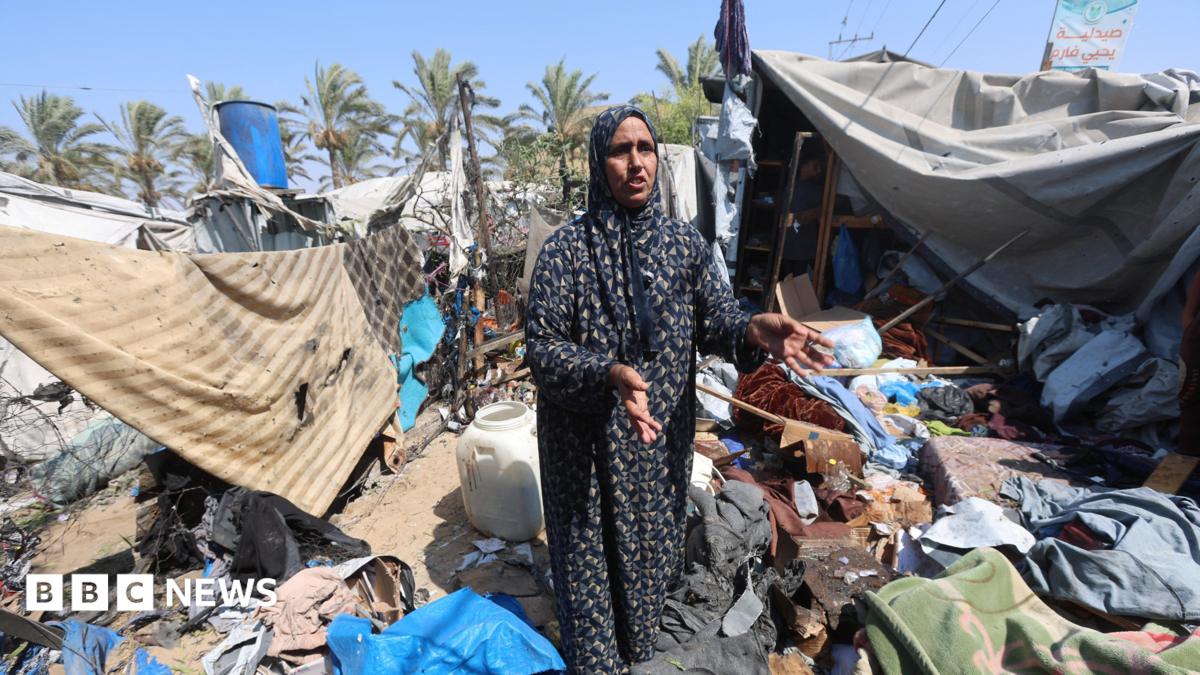
However, Israeli strikes have since resumed. The Israeli military said on Sunday that it had targeted Hamas and Islamic Jihad “terrorists” in Khan Younis and Nuseirat. Local medics said several people living in a tent camp in Khan Younis were injured.
Israel and Hamas accuse each other of ceasefire violations.
The war was triggered by the Hamas-led attack on southern Israel on 7 October 2023, in which about 1,200 people were killed and 251 others were taken hostage.
Israel responded to the attack by launching a military campaign in Gaza, during which more than 73,000 people have been killed, including 21,280 children, according to the territory’s health ministry, whose figures are considered reliable by the UN.
The UN estimates that about 1.9 million people – 90% of Gaza’s population – have been displaced since the war started.
-

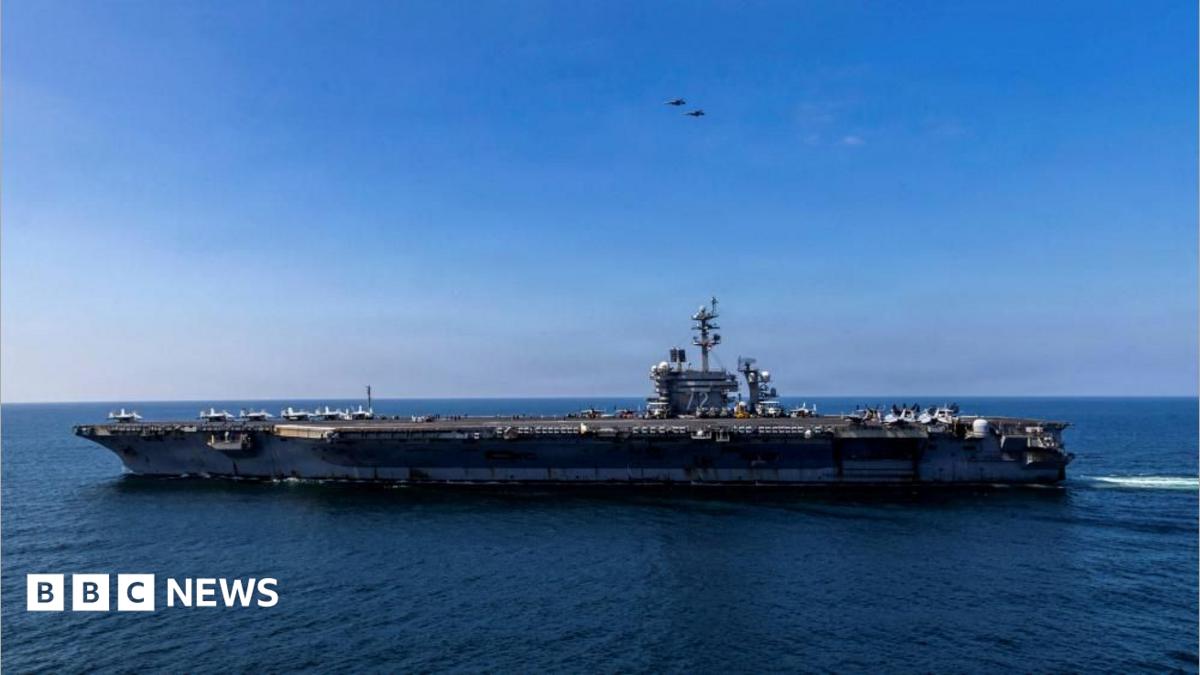
Trump says US scaling back joint military operations with South Korea
President Donald Trump has said the US will “substantially reduce” joint military exercises with South Korea, citing his “very good relationship” with North Korea’s leader Kim Jong Un.
He also noted on Truth Social that South Korea had recently declined to join the US in the “denuclearisation” of Iran.
“These exercises are not only costly, with much of these costs paid for by the United States of America (as usual!), but send a signal that is totally inappropriate and hostile,” Trump posted.
Seoul said it was reviewing Trump’s comments, adding it hoped a favourable relationship between Washington and Pyongyang could lead to meaningful talks. Pyongyang has not yet commented.
Earlier, South Korea said the drills with the US would proceed “as scheduled”.
It comes after North Korea this month conducted ballistic missile tests banned by the United Nations.
Trump said in his social media post on Sunday that it was “too late to cancel”, as the US and South Korea were due to start their annual military exercises on Monday.
He added: “While somewhat unrelated (?), I recently asked the President of South Korea if they would like to join us in the Denuclearization of the Islamic Republic of Iran, and they said, ‘No thanks!’”
Trump’s announcement came less than 24 hours after he posted an old photograph of himself and Kim from 2019, writing the two were great friends “despite the unfriendly look on this particular picture”.
In its statement, South Korea’s presidential Blue House said it would continue diplomatic consultations on US-Korea military cooperation related to the Strait of Hormuz, while discussing details on joint military drills with the United States.
Experts suggest the walking back of joint military exercises could carry a high cost with relatively little benefit.
“US-South Korea combined defence exercises are essential for military forces to be ready and capable of doing their jobs,” said Leif-Eric Easley, a professor at Ewha University in Seoul.
“Scaling them back can damage alliance coordination, slow the process of South Korea taking on greater responsibility for its own defence, and weaken deterrence against possible conflicts in Asia.
“The cost savings from downsizing drills are marginal, while the diplomatic benefits for relations with North Korea are doubtful.”
Last week, US and South Korean military leaders held a joint press conference announcing Ulchi Freedom Shield.
They said the 11-day event would be similar in scale to previous years, with about 18,000 South Korean soldiers participating.
During the news conference, military leaders also mentioned North Korea’s deployment of troops to aid Russia’s war against Ukraine.
US military spokesperson Ryan Donald said “our training accounts for that threat”, referring to North Korean soldiers returning from the battlefield. About 28,500 American military personnel are stationed in South Korea.